Source ip67 waterproof washing drone for Solar, Roofs, Facades
Source the ip67 waterproof washing drone for industrial cleaning tasks. Compare 29 models featuring 3200psi pressure, 20-50 minute flight time, and automatic operation. Ideal for solar panels, building facades, and large-area surfaces; compare the available evidence and request quotations based on your requirements.
Key considerations
Products List


Comprehensive Sourcing Guide
IP67 Waterproof Washing Drone Sourcing Guide
Procurement teams must first distinguish between general cleaning drones and those specifically engineered for wet environments, as the core keyword implies a robust waterproof rating essential for high-pressure operations. The observed product listings confirm the existence of units designed for solar panel and facade cleaning that explicitly feature water-resistant capabilities, allowing them to operate in moderate rain or withstand direct water washing. Buyers should verify that the specific model's waterproof grade matches the operational intensity, ensuring the body can be washed with water without internal component failure.
When evaluating the market, it is critical to note that while some listings mention "IP67" as a category descriptor, the supplied facts specifically cite a waterproof grade suitable for moderate rain and direct washing. This distinction requires buyers to request detailed test reports or manufacturer declarations to confirm if the unit meets the strict IP67 standard for dust tightness and temporary immersion. Relying solely on marketing terms without verifying the specific ingress protection rating can lead to equipment failure in harsh industrial cleaning scenarios where water exposure is constant and severe.
Product Scope and Observed Listing Signals
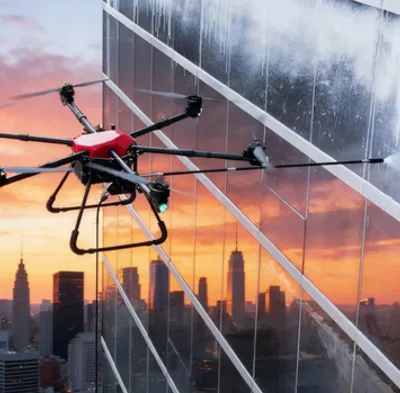
The current market for automated cleaning drones includes specialized units like the JTC20 model, which is explicitly designed for large-area solar panel maintenance and commercial building facades. These devices typically feature a 4-axis configuration with a maximum takeoff weight of 21.5kg, powered by battery systems that offer flight times ranging from 20 to 50 minutes depending on payload and environmental conditions. Buyers should expect to find units equipped with high-pressure pumps capable of 3200psi, enabling effective removal of stubborn dirt and grime from solar cells and industrial surfaces.
Listing signals indicate that these machines often come with advanced automation features, including automatic work functions and front obstacle avoidance radar to ensure safe navigation near complex structures. The product scope extends to include foldable designs with aviation aluminum alloy frames, facilitating transport to remote solar farms or tall building sites. Procurement teams must scrutinize the spray boom dimensions, which are observed around 1.5m, and the water pipe height capabilities, which can reach up to 100 meters, to ensure the drone matches the specific height requirements of the target cleaning project.
Technical Specifications to Verify
Verification of the propulsion and cleaning systems is paramount, as the drone must maintain stability while delivering high-pressure water streams at speeds up to 1m/s. Buyers should confirm the water flow rate, typically observed at 15L/M, and ensure the pump pressure aligns with the cleaning requirements of the specific surface material, whether it is delicate solar glass or rugged industrial metal. The drive system, powered by electric motors, must be capable of withstanding wind resistance levels of at least Level 5 to maintain precise positioning during outdoor operations.
The control and monitoring infrastructure requires careful assessment, specifically the inclusion of a 720p FPV camera and a remote controller with a screen, such as the H12 model, for real-time visual feedback. It is essential to verify the charging infrastructure, as fast chargers are standard but battery swap times can significantly impact operational efficiency. Additionally, the clean width of 30-80cm must be matched against the drone's flight altitude capabilities, which range from 0 to 100 meters, to calculate the total coverage area and optimize the cleaning workflow for maximum throughput.
Compliance and Safety Documentation
Safety compliance in the drone industry often involves adherence to international standards for electrical safety and electromagnetic compatibility, though specific certification documents must be requested for each unit. The observed listings mention CE and RoHS certifications, which are critical for market entry in many regions and indicate compliance with health, safety, and environmental protection standards. Procurement teams must ensure that the supplier provides valid, up-to-date certificates that cover the specific model being purchased, rather than relying on generic claims that may not apply to the exact configuration.
Beyond electrical safety, the operational safety of high-pressure cleaning drones requires documentation regarding the water resistance and structural integrity of the airframe. While the product facts note a waterproof grade for moderate rain, buyers should demand specific test data regarding the ingress protection rating to confirm the device can withstand the intended cleaning pressure without water ingress. Documentation should also cover the battery safety standards, ensuring the lithium-ion power supply meets relevant transport and usage regulations to prevent thermal runaway during extended commercial operations.
Cost Drivers and Commercial Terms
The total cost of ownership for these specialized drones is heavily influenced by the complexity of the cleaning mechanism, including the high-pressure pump and the specialized water delivery system. Units with higher pressure ratings, such as 3200psi, and larger water flow capacities generally command higher prices due to the advanced engineering required to integrate these systems into a lightweight airframe. Buyers should also consider the cost of the remote control unit, which often includes a dedicated screen and advanced obstacle avoidance radar, as these components add significant value to the operational safety and efficiency of the system.
Commercial terms regarding the minimum order quantity and lead time are variable, with observed ranges suggesting flexibility from single units to bulk orders of up to 100 units. The packaging, typically an aviation aluminum box, adds to the initial cost but is essential for protecting the drone during shipping and storage. Procurement teams must negotiate clear terms for the inclusion of maintenance toolkits and fast chargers, as these accessories are critical for immediate deployment and long-term reliability, ensuring that the operational downtime is minimized after the initial purchase.
Supplier Qualification and Quality Control
Supplier qualification should prioritize manufacturers with a proven track record in drone production, as the observed facts highlight suppliers with over 10 years of experience in both drone manufacturing and factory operations. This experience is a strong indicator of the supplier's ability to handle the complex integration of mechanical, electrical, and fluid systems required for a high-pressure cleaning drone. Buyers should verify the supplier's capacity to provide customization services, as the specific requirements for solar farms or industrial buildings often necessitate tailored solutions for water pipe height or spray boom dimensions.
Quality control processes must be rigorously evaluated, focusing on the manufacturing standards for the aviation aluminum alloy frame and the waterproofing of the internal components. The supplier should demonstrate a robust testing protocol for the drone's flight stability, obstacle avoidance radar, and pump pressure consistency before shipment. It is advisable to request sample units for independent testing to validate the claimed specifications, such as the 20-50 minute flight time and the 1m/s cleaning speed, ensuring that the product meets the operational demands of the intended commercial application.
Long-Term Procurement Checks
Long-term procurement success depends on the availability of spare parts and the supplier's commitment to after-sales support for the specialized cleaning systems. Buyers must establish a clear agreement regarding the maintenance of the high-pressure pump and the replacement of wear-prone components like nozzles and seals, which are subject to constant stress during operation. The inclusion of a maintenance toolkit in the standard package is a positive indicator, but a formal service agreement should be negotiated to ensure rapid response times for any technical issues that arise during the warranty period.
Sustainability and future-proofing are also critical considerations, as the technology for automated cleaning drones continues to evolve rapidly. Procurement teams should verify the supplier's roadmap for software updates and hardware upgrades, ensuring that the drone can adapt to new cleaning standards or increased operational requirements. Additionally, the supplier's ability to provide training for operators on the safe use of the high-pressure system and the advanced remote control features is essential for maintaining a safe and efficient workforce over the long term.
FAQs
What is the cleaning principle of this drone?
The drone operates on a chemical cleaning principle using cold water cleaning processes. It features high-pressure cleaning capabilities with a pump pressure of 3200psi and a water flow rate of 15 liters per minute for effective surface maintenance.
Can the drone operate in moderate rain conditions?
Yes, the drone body can be washed with water and operates in moderate rain conditions. It is designed with a waterproof grade that allows for cleaning in wet environments while maintaining structural integrity during commercial roof and facade operations.
Which certification standards does the product meet?
The product meets CE and RoHS certification standards for safety and environmental compliance. These certifications ensure the drone adheres to international regulations for electrical equipment used in industries like automotive, power, and petrochemical sectors.
How long does the battery power last during flight?
The battery power cleaning drone offers a fly time ranging from 20 to 50 minutes per charge. This duration supports efficient cleaning of large areas such as solar panels and facades without requiring frequent battery swaps during operations.
What is the maximum takeoff weight of the drone?
The maximum takeoff weight of this cleaning drone is 21.5 kilograms. This weight capacity supports the 4-axis structure and necessary equipment like the 720p FPV camera and spray boom for stable commercial cleaning applications.
Can the drone arms be folded for transport?
Yes, all arms of the drone can be folded to facilitate compact storage and transport. This foldable design is housed in an aviation aluminum box packaging, making it convenient for logistics and deployment across different industrial sites.
What is the spray boom width for cleaning?
The spray boom width is 1.5 meters, providing a clean width between 30 and 80 centimeters. This configuration allows for efficient coverage of solar panels and building facades while maintaining a clean speed of 1 meter per second.